Dana Müller · 17 September 2026
Symbiotic Strategies in Web Crawling: Drawing Parallels from Fungal Expansion Models
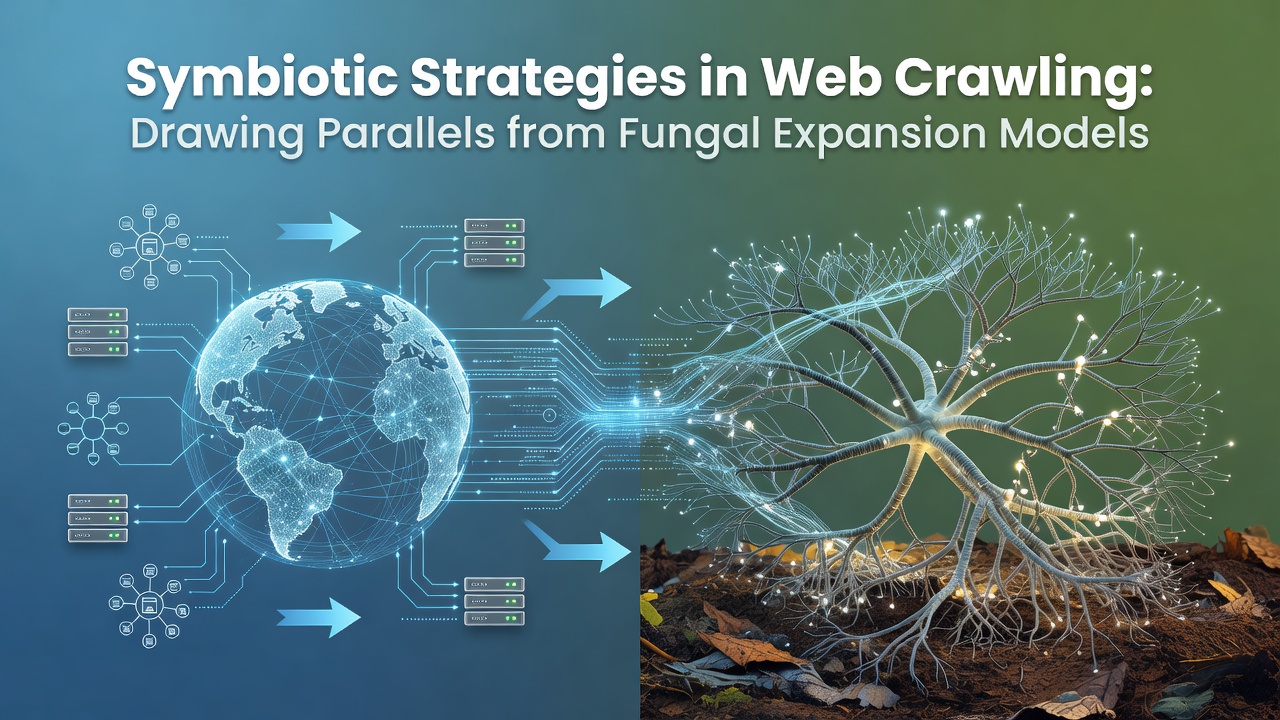
Researchers have long examined how fungal networks expand across forest floors and soil layers, and observers note that these biological systems share structural similarities with efficient web crawling operations. Data from mycology studies show that mycelium forms interconnected threads that distribute resources while maintaining balance with host organisms, whereas web crawlers traverse site architectures to index content without disrupting server performance. Those who've analyzed both domains point out that the expansion logic in fungi relies on selective growth toward nutrient sources, and similar selective pathways appear in crawler algorithms that prioritize high-value pages based on link structures and update frequency.
Fungal Network Dynamics and Resource Allocation
Studies on mycorrhizal associations reveal that fungi connect with plant roots to exchange nutrients, and this partnership allows the network to expand across wide areas while avoiding redundant growth into depleted zones. Research published through academic channels indicates that signal transmission along hyphae directs expansion toward areas with higher resource potential, and this directed movement reduces energy expenditure. Experts tracking these patterns have documented cases where fungal colonies adjust their reach in response to environmental feedback, and the same feedback loops surface in crawler systems that monitor response codes and crawl delays to refine their paths.
One documented example involves networks that span multiple tree species, where the fungi distribute carbon and minerals according to demand signals from the hosts. Figures from field observations demonstrate that such distribution prevents over-extraction from any single source, and web crawling protocols apply analogous limits through rate throttling and robots.txt directives. Observers in computational biology have noted that these fungal models achieve coverage across heterogeneous terrain, and that principle translates directly when crawlers navigate sites with varying page depths and update cycles.
Mapping Expansion Patterns to Crawler Behavior
Web crawling systems process billions of URLs daily, and data from industry reports show that inefficient traversal leads to server strain or incomplete indexing. Those studying fungal expansion point out that mycelium avoids uniform radial growth by concentrating threads along gradients of moisture and organic matter, and crawler schedulers apply comparable gradient-based prioritization using metrics such as PageRank derivatives and freshness scores. In September 2026, updates to indexing frameworks incorporated additional signals for dynamic content detection, and these changes mirror how fungi respond to seasonal shifts in nutrient availability.
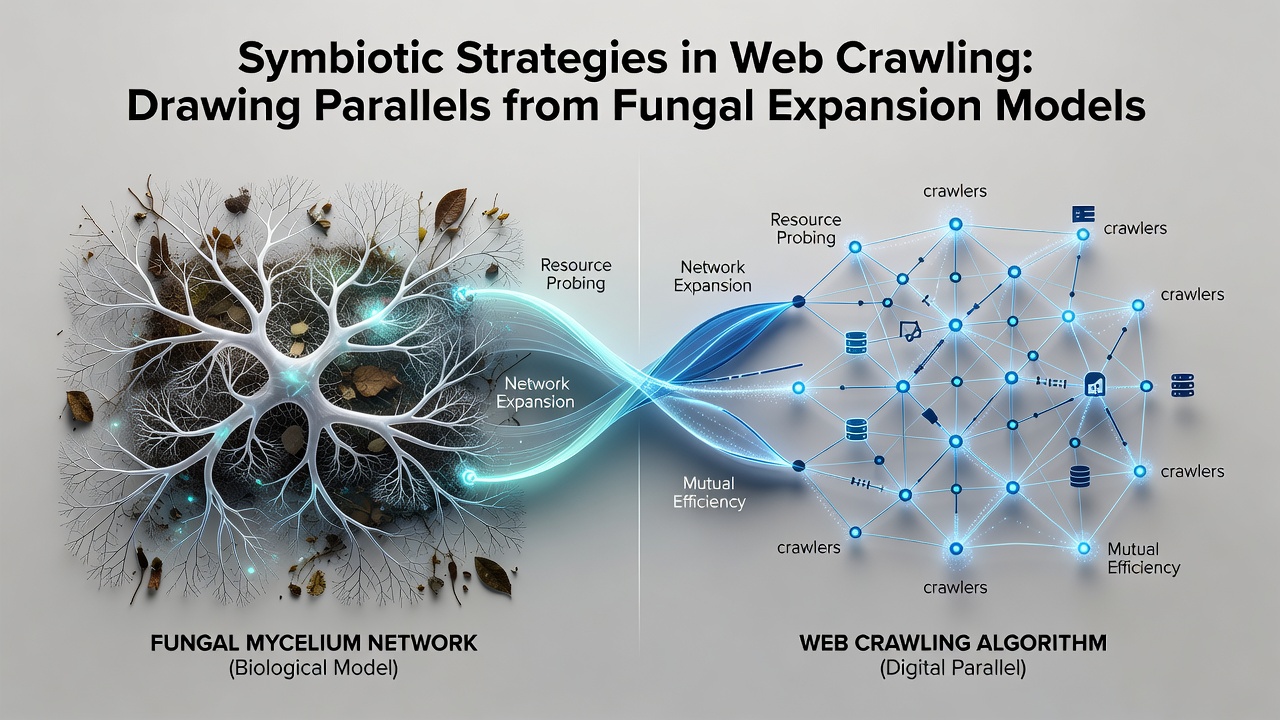
Analyses of large-scale crawls indicate that parallel threads function like separate hyphal branches, each advancing independently yet sharing discovered link data to prevent overlap. Researchers who modeled these processes found that shared memory structures reduce redundant requests, and the outcome resembles the way fungal networks consolidate explored territory into a single coherent map. People managing high-volume sites report that crawlers adopting such coordinated expansion encounter fewer blocks and maintain steadier throughput over extended periods.
Mutual Benefits in Crawling Partnerships
Site operators and search infrastructure providers both gain when crawlers respect operational boundaries, and evidence from server logs demonstrates that measured request patterns correlate with higher indexing accuracy. Fungal symbioses succeed because each participant receives measurable returns, and the same reciprocity appears when crawlers surface fresh content that drives traffic while sites supply structured data that improves crawl efficiency. According to reports from the World Wide Web Consortium, standardized markup reduces parsing overhead, and this standardization parallels the chemical signaling that guides fungal growth along optimal routes.
Further parallels emerge in how both systems handle resistance or barriers. Fungi reroute around compacted soil or toxic patches, and crawlers skip disallowed paths or adjust for temporary server errors. Data collected across multiple regional networks shows that adaptive rerouting preserves overall coverage while minimizing wasted requests, and similar statistics appear in crawler performance dashboards maintained by large indexing operations.
Implementation Patterns Observed in Practice
Teams deploying crawler frameworks have tested priority queues that allocate bandwidth according to historical update rates, and the approach echoes the fungal strategy of reinforcing successful pathways. One implementation tracked changes across thousands of domains and recorded a measurable drop in error responses after introducing decay functions that deprioritize stale branches. Observers reviewing these deployments note that the resulting index maintained higher completeness scores without increasing total request volume.
Additional work on distributed crawling has explored peer-to-peer coordination models, where individual nodes exchange partial maps much like hyphae share nutrient data across the colony. Research from institutions studying network topology indicates that such coordination lowers latency for discovering new content clusters, and the same studies highlight reduced load on target servers when nodes avoid simultaneous requests to identical subtrees.
Conclusion
The parallels between fungal expansion and web crawling rest on observable mechanisms of selective growth, resource sharing, and adaptive response to feedback. Data gathered from both biological field studies and large-scale web operations continue to show that systems following these principles achieve broader coverage with lower disruption. As indexing requirements evolve through 2026 and beyond, the structural lessons from mycelial networks remain available for refinement of crawler scheduling and coordination methods.