Petra Schröder · 15 October 2026
Exploring Nutrient Cycling Mechanisms in Forest Ecosystems Through Fungal Bloom Dynamics
Forest ecosystems rely on intricate nutrient cycling processes where fungal bloom dynamics play a central role in moving elements like nitrogen, phosphorus, and carbon between soil, plants, and microorganisms. Researchers track these blooms as periods of rapid mycelial growth and fruiting body formation that coincide with seasonal shifts in moisture and temperature, allowing fungi to accelerate decomposition and symbiotic exchanges.
Fungal Networks and Their Structural Role
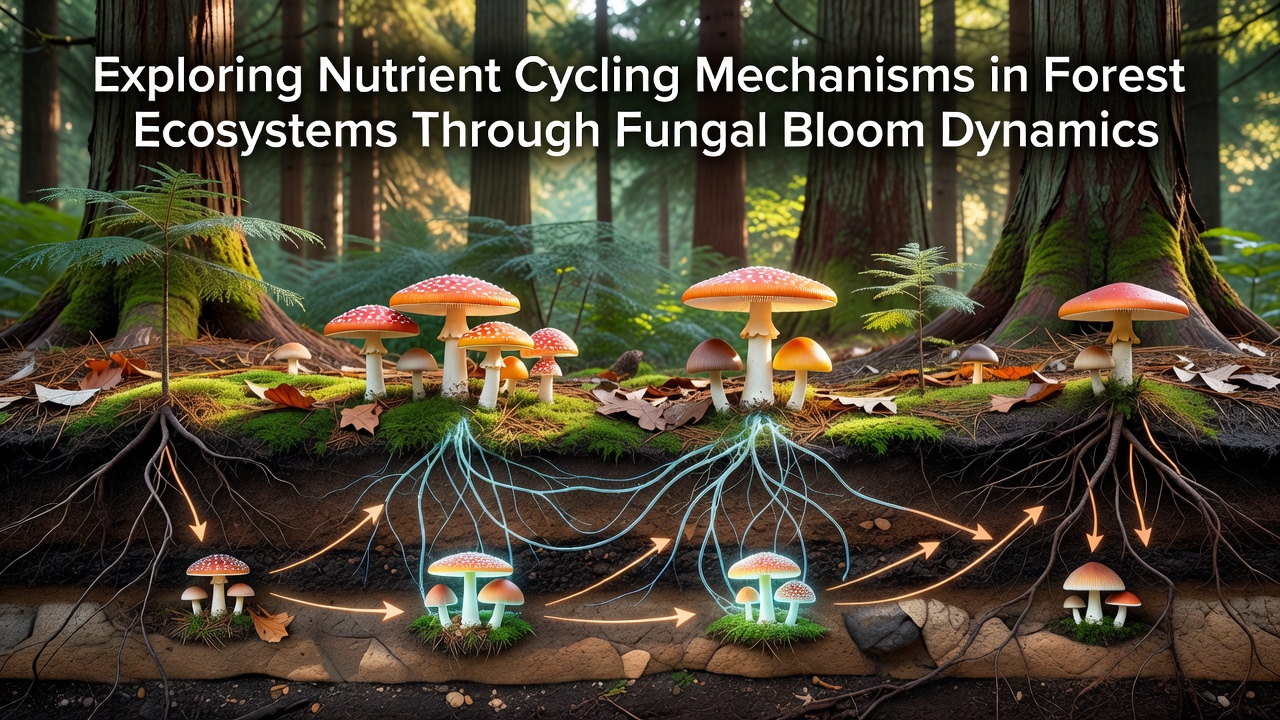
Mycorrhizal fungi form extensive underground networks that connect tree roots across wide areas, and these connections enable direct transfer of nutrients while also stabilizing soil aggregates that retain water and minerals. Studies document how ectomycorrhizal species dominate in temperate forests whereas arbuscular types prevail in tropical zones, each adapting bloom timing to local climate patterns that trigger spore release and hyphal expansion.
Observers note that bloom events often follow rainfall pulses which stimulate enzyme production for breaking down leaf litter and woody debris, releasing bound nutrients back into available forms. Data from long-term monitoring plots reveal that fungal activity accounts for up to 80 percent of annual litter decomposition in many coniferous stands, according to figures compiled by the US Forest Service.
Mechanisms of Nutrient Transfer During Blooms
During peak bloom phases fungi secrete organic acids and phosphatases that solubilize minerals from rock particles and organic matter, and this chemical activity feeds into both plant uptake and microbial loops. Isotope tracing experiments show phosphorus moving from fungal hyphae into host trees within days of bloom initiation, while carbon flows in the opposite direction as photosynthates support continued fungal growth.
Researchers have mapped these exchanges in real time using stable isotope ratios, finding that bloom-driven transfers intensify when soil temperatures rise above 12 degrees Celsius in spring and autumn windows. Such patterns help maintain forest productivity even on nutrient-poor substrates where direct root absorption would otherwise limit growth.
Seasonal Patterns and Environmental Influences
Bloom dynamics align closely with leaf fall cycles because increased substrate availability from senescing vegetation fuels rapid mycelial proliferation, and this timing ensures efficient recapture of nutrients before they leach away in winter rains. In boreal regions bloom peaks shift later into the season, whereas Mediterranean forests show earlier surges tied to winter precipitation.
Climate records indicate that extended dry periods suppress bloom intensity, reducing overall cycling rates by limiting hyphal extension and enzyme diffusion through soil pores. Field teams working in October 2026 continue to collect data on how recent precipitation anomalies have altered bloom onset across multiple ecoregions, providing updated baselines for modeling future scenarios.
Research Methods and Data Collection
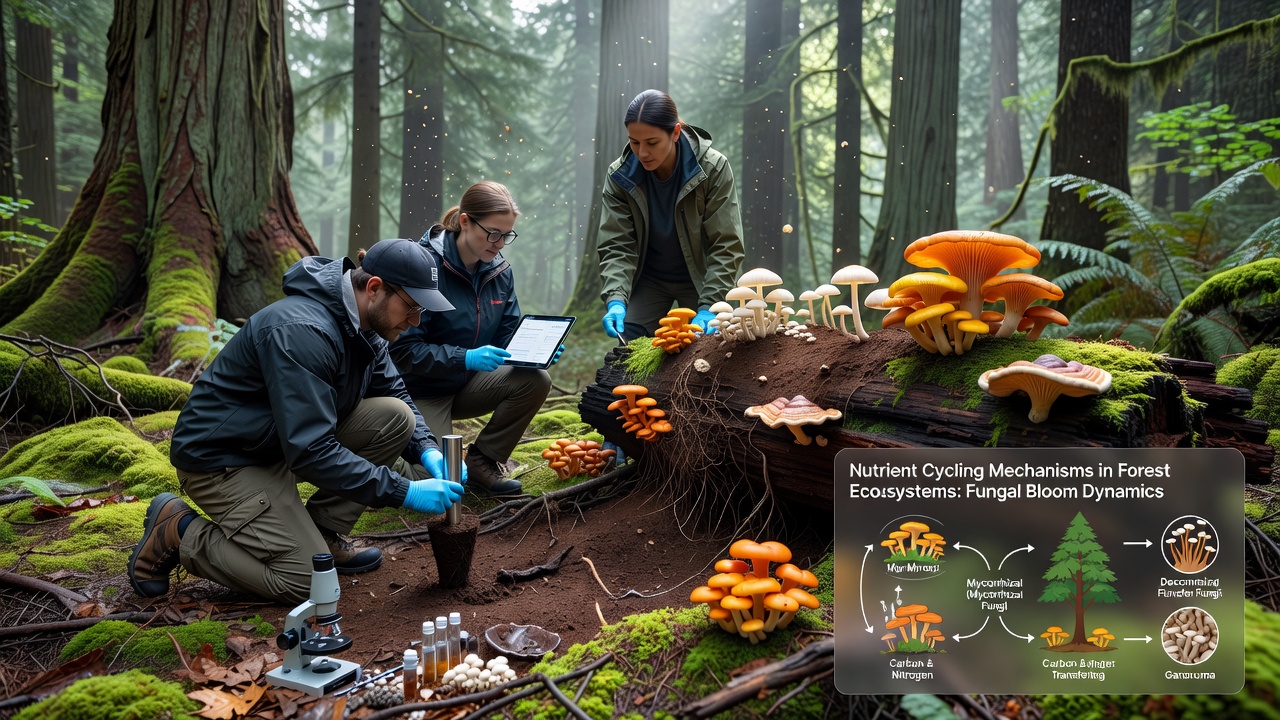
Scientists combine soil coring, molecular sequencing of fungal communities, and remote sensing of canopy health to quantify bloom contributions to nutrient budgets. Network analysis tools reveal that certain keystone fungal taxa drive disproportionate shares of phosphorus mobilization during bloom windows, and removal experiments confirm measurable drops in tree foliar nutrient concentrations when these taxa are excluded.
Long-term plots maintained by Australian research groups have tracked carbon flux changes linked to bloom frequency over two decades, showing that sites with consistent autumn blooms retain higher soil organic matter levels compared with those experiencing irregular events.
Conclusion
Nutrient cycling in forests depends on the timing and intensity of fungal bloom dynamics that connect decomposition, symbiotic transfer, and soil retention processes into a functional whole. Continued monitoring through 2026 and beyond supplies the quantitative records needed to understand how these mechanisms respond to changing environmental conditions while sustaining ecosystem productivity.